 |
Books Should Be Free Loyal Books Free Public Domain Audiobooks & eBook Downloads |
|
|
|
Books Should Be Free Loyal Books Free Public Domain Audiobooks & eBook Downloads |
|
Fiction |
|---|
|
Book type:
Sort by:
View by:
|
By: Émile Zola (1840-1902) | |
|---|---|
 L'Assommoir
Émile François Zola (French pronunciation: [emil zɔˈla]) (2 April 1840 – 29 September 1902) was an influential French writer, the most important exemplar of the literary school of naturalism. More than half of Zola’s novels were part of a set of twenty novels about a family under the Second Empire collectively known as Les Rougon-Macquart. L’Assommoir (1877) is the seventh novel in the series. Usually considered one of Zola’s masterpieces, the novel—a harsh and uncompromising study of alcoholism and poverty in the working-class districts of Paris—was a huge commercial success and established Zola’s fame and reputation throughout France and the world. | |
 Therese Raquin
An unsatisfied wife kills her weak husband in order to carry on a sordid affair with another man. However, her selfish plans are spoiled when her husband continues to haunt her. This is often said to be Zola's first great novel. | |
 The Flood, trans. by an unknown translator
A well-to-do French farm family is destroyed by a flood. The story, thrilling to the very end, is told from the point of view of the family’s 70-year-old patriarch. The story speaks of the helplessness of mankind in the face of the forces of nature. | |
 The Fat and the Thin
| |
|
Four Short Stories By Emile Zola
| |
|
L'Assommoir
| |
|
The Fête At Coqueville 1907
| |
By: Edmondo De Amicis (1846-1908) | |
|---|---|
|
Cuore (Heart) An Italian Schoolboy's Journal
| |
By: Philip Jose Farmer (1918-2009) | |
|---|---|
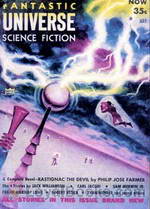 Rastignac The Devil
French colonists on a planet ruled by reptiles and amphibians are forced to wear living “skins” that subdue aggression and enforce vegetarianism. As children, Rastignac and his reptile friend Mapfarity force themselves to become carnivores and begin a protein fueled journey that causes Rastignac to develop a Philosophy of Violence. When a spaceship from Earth crashes in the ocean, Rastignac and company must put their philosophy to the test. - Rastignac The Devil was first published in the May 1954 issue of Fantastic Universe Magazine. | |
By: Frank Stockton (1834-1902) | |
|---|---|
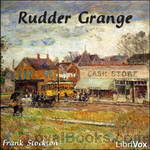 Rudder Grange
This book presents a number of short, comedic sketches of a country life in middle America in the late 1800s. The hilarious twists and turns endear our adorable, naive married couple to the reader; and the orphan servant Pomona – dear, odd, funny Pomona! – is the focus of several of the stories. Imagine a honeymoon in a lunatic asylum, and you’ve got Rudder Grange! | |
 Pomona's Travels
Pomona and Jone of Rudder Grange fame travel to England and Scotland. Along the way, Pomona tangles with wild pigs, haymaking, hotels great and small, Pullman cars, comparison-makers, and a Duchess. She makes two matches and – in her usual, unorthodox way – stag hunts and attends a knighting. Pomona is as hilarious as ever, if a bit more rounded off on the edges. | |
By: Joseph Sheridan LeFanu (1814-1873) | |
|---|---|
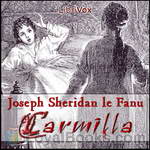 Carmilla
Published in 1872, Carmilla is an early work in the vampire literature genre and is incidentally one of the most influential of its type. The gothic novella accounts the tale of Laura, a young woman who becomes susceptible to the friendship and seductive charms of the mysterious Carmilla. A gripping tale of coincidence, mystery, compulsion, dark romance, and deception, Le Fanu’s classic is regarded as having paved the way for modern takes on vampires. Narrated by Laura, the novel opens with a recount of her childhood, as she depicts growing up in a beautiful, yet solitary castle encompassed by a forest in Styria, Austria... | |
By: Booth Tarkington | |
|---|---|
 Alice Adams
A Pulitzer Prize-winning novel, Alice Adams chronicles the attempts of a lower middle class American midwestern family at the turn of the 20th century to climb the social ladder. The eponymous heroine is at the heart of the story, a young woman who wants a better place in society and a better life. As Gerard Previn Meyer has stated, “Apart from being the contribution to social history its author conceived it to be, [Alice Adams] is something more, that something being what has attracted to it so large a public: its portrait of a (despite her faults) ‘lovable girl’.” | |
 Seventeen
A Tale of Youth and Summer Time and the Baxter Family Especially William | |
 Gentle Julia
Penrod for girls in the form of Florence, the bratty younger cousin of luminous Julia Atwater, enlivens this romantic comedy set in Tarkington's Indiana of the early 20th Century. | |
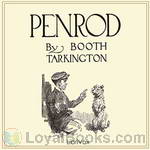 Penrod
Join Penrod Schofield and his wistful dog Duke, in a hilarious romp through turn of the century Indianapolis, chronicling his life, loves, and mostly the trouble he gets into. | |
 The Turmoil
The Turmoil is the first novel in the ‘Growth’ trilogy, which also includes The Magnificent Ambersons (1918) and The Midlander (1923, retitled National Avenue in 1927). In 1942 Orson Welles directed a film version based on volume 2, also titled “The Magnificent Ambersons.” The trilogy traces the growth of the United States through the declining fortunes of three generations of the aristocratic Amberson family in a fictional Mid-Western town, between the end of the Civil War and the early part of the 20th century, a period of rapid industrialization and socio-economic change in America... | |
|
The Gentleman from Indiana
| |
|
The Two Vanrevels
| |
|
His Own People
| |
|
Ramsey Milholland
| |
By: Gideon Wurdz (b. 1875) | |
|---|---|
 The Foolish Dictionary
“The Foolish Dictionary” was written by “Gideon Wurdz” and was published in 1904. According to the beginning of the book, it is “An exhausting work of reference to un-certain English words, their origin, meaning, legitimate and illegitimate use…” This a a short but amusing dictionary which “redefines” words in some interesting ways. Funny and sometimes bizarre observations are sprinkled throughout. In keeping with the policy to read, rather than attempt to rewrite, books – even those with offensive content – nothing has been omitted... | |
By: Heinrich Hoffmann (1809-1894) | |
|---|---|
 Slovenly Betsy
Hienrich Hoffmann was a German psychiatrist and doctor. He had written poetry and sketches for his son, and was persuaded to have a collection of these printed.The stories were not perceived as cruel or overly moral by Hoffmann's contemporaries.This American version contains a few of the stories from the original German "Struwwelpeter" publication. | |
By: Alphonse Daudet (1840-1897) | |
|---|---|
 Tartarin of Tarascon
It tells the burlesque adventures of Tartarin, a local hero of Tarascon, a small town in southern France, whose invented adventures and reputation as a swashbuckler finally force him to travel to a very prosaic Algiers in search of lions. Instead of finding a romantic, mysterious Oriental fantasy land, he finds a sordid world suspended between Europe and the Middle East. And worst of all, there are no lions left. | |
|
The Immortal Or, One Of The "Forty." (L'immortel) - 1877
| |
|
The Nabob
| |
|
Tartarin De Tarascon
| |
|
Tartarin On The Alps
| |
|
Fromont and Risler
| |
By: George Bernard Shaw (1856-1950) | |
|---|---|
 Mrs. Warren's Profession
The story centers on the relationship between Mrs Kitty Warren, a rich woman, described by the author as "on the whole, a genial and fairly presentable old blackguard of a woman" and her daughter, Vivie. Mrs Warren is a middle-aged woman whose Cambridge-educated daughter, Vivie, is horrified to discover the morally questionable way her mother acquired her fortune. | |
By: Katherine Mansfield (1888-1923) | |
|---|---|
 At The Bay
Katherine Mansfield was a prominent Modernist writer of short fiction, and one of New Zealand’s best-known authors. “At the Bay” is a story from her collection The Garden Party. | |
By: Helen Hunt Jackson (1830-1885) | |
|---|---|
|
Letters from a Cat
Letters from a Cat: published by her mistress for the benefit of all cats and the amusement of little children is a collection of letters that a little girl receives from her pet while she is away from home. They tell of her pet’s adventures and misadventures. The book includes a preface which gives a little biography of the cat including its sad demise. H.H. was the alias of Helen Maria Hunt Jackson (1830 –1885) who is better known for her novel Ramona in which she dramatized the mistreatment of Native Americans and which formed part of her campaign for improved treatment of Native Americans by the U.S. Government. | |