 |
Books Should Be Free Loyal Books Free Public Domain Audiobooks & eBook Downloads |
|
|
|
Books Should Be Free Loyal Books Free Public Domain Audiobooks & eBook Downloads |
|
Fiction |
|---|
|
Book type:
Sort by:
View by:
|
By: Anonymous | |
|---|---|
 True Stories of Wonderful Deeds
37 short pieces perfect for newer recorders. These one page Stories of (mostly) Wonderful Deeds were written for Little Folk to teach them about famous incidents in their history. Bonnie Prince Charlie, Nelson and Hardy, Bruce and the Spider, David Livingston, Canute, Sir Philip Sydney, and Elizabeth and Raleigh are just some of the well known people and incidents covered in short stories. | |
By: Maurice Leblanc (1864-1941) | |
|---|---|
 The Crystal Stopper
During a burglary at the home of Deputy Daubrecq a crime is committed, and two accomplices of Arsène Lupin are arrested by the police. One is guilty of the crime, the other innocent, but both will be sentenced to death. Lupin seeks to deliver the victim of a miscarriage of justice, but struggles against Deputy Daubrecq's ruthless blackmailer, who has an incriminating document hidden in a crystal stopper. | |
By: A. A. Milne (1882-1956) | |
|---|---|
|
The Sunny Side
The Sunny Side is a collection of short stories and essays by A. A. Milne. Though Milne is best known for his classic children's books, especially Winnie The Pooh, he also wrote extensively for adults, most notably in Punch, to which he was a contributor and later Assistant Editor. The Sunny Side collects his columns for Punch, which include poems, essays and short stories, from 1912 to 1920. Wry, often satirical and always amusingly written, these pieces poke fun at topics from writing plays to lying about birdwatching. They vary greatly in length so there is something for everyone. | |
By: Richard Harding Davis (1864-1916) | |
|---|---|
|
The Lost House
Austin Ford, the London correspondent of the New York Republic, is spending some idle time in the American Embassy chatting with the Second Secretary, when suddenly a note is brought in. This note is an appeal for help, found in the gutter in a dark alley. The writer claims to be a young girl, who is kept against her will locked up in a lunatic asylum by her uncle. Although the Second Secretary tries to convince him that there is nothing to it, the journalist is determined to follow the lead... | |
By: Ellis Parker Butler (1869-1937) | |
|---|---|
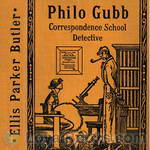 Philo Gubb, Correspondence-School Detective
Philo Gubb, not being content with his job as wallpaper-hanger, has higher aspirations: to become a detective, just like Sherlock Holmes. To that end, he enrolls in a correspondence course, where he gets lessons through the mail as well as the necessary disguises for a detective. Philo Gubb, not being really clever or intuitive, or even looking good in those disguises, gets involved in one case after the other - and sooner or later happens to stumble on and solve the crime... Each of these stories... | |
By: Colette (1873-1954) | |
|---|---|
 Barks and Purrs
Barks and Purrs is a collection of seven episodes in the lives of Toby-Dog, a French Bulldog, and Kiki-the-Demure, a Maltese cat, living in a comfortable household. The episodes cover a hot afternoon, a train ride, and what happened when dinner was late or their mistress was ill. We hear about the first fire in autumn, a heavy storm, and about a visitor in the household.Sidonie-Gabrielle Colette-Willy was throughout her life a controversial French novelist. She published around 50 novels; the best known is “Gigi”. | |
By: Jack London (1876-1916) | |
|---|---|
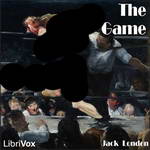 The Game
Jack London wrote at least four stories about boxing; A Piece of Steak (1909), The Mexican (1911), The Abysmal Brute (1911), and The Game (1905). The Game is told, in part, from the point of view of a woman, the fiancée of one of the competitors. This is to be his last fight and they are to be married on the morrow. Against her better judgment, she agrees to watch the bout. (Introduction by Tom Crawford) | |
By: Eleanor H. Porter (1868-1920) | |
|---|---|
|
Miss Billy Married
At the opening to this second sequel to Miss Billy (Miss Billy, Miss Billy's Decision, Miss Billy Married), we find Bertram and Billy finally at the altar. Will wedded bliss ensue and are the patter of little feet on the horizon? Or is misunderstanding and heartache in the cards again? Find out in Miss Billy Married! | |
By: Marie Corelli (1855-1924) | |
|---|---|
 Ziska
Ziska
The story revolves around the mysterious Princess Ziska, who captivates a set of European tourists who are spending time in exotic Egypt. The story is a mystery involving reincarnation, romance & a touch of mild horror. (introduction by ilianthe) | |
By: Caroline Snowden Guild | |
|---|---|
|
Violet: A Fairy Story
A charming fairytale -- with realistic touches -- from the mid-19th Century. | |
By: Katherine Mansfield (1888-1923) | |
|---|---|
|
In a German Pension
The first collected volume of short stories of the New Zealand modernist. Inspired by her own travels, Mansfield begins to refine her craft with a series of tales which depict German life at the brink of the first world war. (Introduction by S. Kovalchik) | |
By: Saki (1870-1916) | |
|---|---|
|
The Toys of Peace
This is the fifth collection of short stories by Saki (H.H. Munro), and was published posthumously in 1923. Even so, many of the stories are quite up to the standard of those collected earlier. | |
By: Richard Harding Davis (1864-1916) | |
|---|---|
|
The Make-Believe Man
Adventure was what our protagonist was looking for, when he boarded the steamer "Patience" for his holiday, and when one has a man with such a vivid imagination like Joseph Forbes Kinney as a travel companion, who seems to find adventures at every turn of the road (and if not, he manufactures them), the two travellers are sure to stumble into trouble... | |
By: William Hope Hodgson (1877-1918) | |
|---|---|
|
Carnacki, The Ghost Finder
Thomas Carnacki was a detective of the supernatural, created for a series of short stories by Wiliam Hope Hodgson. Hodsgon, also a noted photographer and bodybuilder, might have created more stories for this intrepid sleuth of the occult, but he unfortunately died at the youthful age of 40 in World War I. (Introduction by Samanem) | |
By: Murray Leinster (1896-1975) | |
|---|---|
|
The Ambulance Made Two Trips
Big Jake Connors is taking over his town through violence, inimidation and bribery but Detective Sergeant Fitzgerald can only grind his teeth in frustration. The gangsters seem to have everything going their way until the day that a little dry cleaning establishment declines their offer of 'protection' and strange things start to happen. Murray Leinster gives us another wonderful product of 'what if' from his limitless imagination to enjoy in this gem of a story. Listen and smile. | |
By: Edna Ferber (1885-1968) | |
|---|---|
|
One Basket
This sparkling collection of 7 short stories by Ferber including some that are considered her all time best like The Woman Who Tried To be Good and The Maternal Feminine. Writing for and about women, Edna Ferber touches the very heart and soul of what it means to be human; to make good choices and bad; to be weak and strong. This was a very popular book when published in 1913 | |
By: Pansy | |
|---|---|
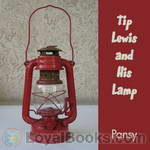 Tip Lewis and His Lamp
Tip Lewis is a mischievous, unpromising scamp. One Sunday, a visiting Sunday school teacher tells his mission class how her minister had grown up in similarly bad circumstances, but had decided to follow God and had never regretted it. Tip decides to try to BE somebody, like that minister did. He is given a Bible - his lamp - to use as a guide, and from there, his life begins to change. (Introduction by TriciaG) | |
By: Harriet Beecher Stowe (1811-1896) | |
|---|---|
|
The Pearl of Orr's Island
Go on a journey to the coast of Maine and immerse yourself in the picturesque community on Orr’s Island. See the raindrops glistening on the pine needles and hear the waves crashing on the rocks. This is a tale of romance, tragedy, crusty sea captains, an impetuous boy, a loving girl, complete with village gossips and twists in the plot. | |
By: William Dean Howells (1837-1920) | |
|---|---|
|
The Rise of Silas Lapham
The Rise of Silas Lapham is the most widely read of W.D. Howells’ novels. An example of literary realism, the story is about a farmer (Silas Lapham) who launches a very successful paint business, and moves his family up the social ladder of Boston. Lapham, however, is not one of the new types of American businessman, the ruthless plutocrat, rather he is the old-fashioned trustworthy Yankee trader, and the story deals with how he fares in the industrial capitalist environment. It is also a novel of manners, telling the story of the courtship of a daughter, and the difficulties the family deals with in attempting to move from one social class to another. | |
By: Neil Munro (1863-1930) | |
|---|---|
|
Doom Castle
Doom Castle is the story of young Count Victor's journey to Scotland after the Jacobite Rebellion, searching for a traitor to the Jacobite cause as well as a mysterious man under the name of "Drimdarroch", whom he swore revenge. After a perilious journey, Count Victor arrives at Doom Castle as a guest of the enigmatic Baron of Doom, his two strange servitors and his beautiful daughter... (Summary by Carolin) | |
By: Zona Gale (1874-1938) | |
|---|---|
|
Miss Lulu Bett
Lulu Bett is a spinster, living at the turn of the 20th century essentially as a servant with her sister Ina and brother-in-law Dwight. She is, uncomplainingly, "the family beast of burden," living in the background and tending to the family's needs. It therefore surprises everyone, Lulu included, when Dwight's visiting brother Ninian proposes to her, and she accepts. The surprise is even greater when Lulu returns home alone from their homeymoon trip, with the news that Ninian was already legally married before he married her... | |
By: H. G. Wells (1866-1946) | |
|---|---|
|
The Secret Places of the Heart
Richard Hardy, a member of the British gentry, tries to resolve problems in his marriage as he travels with a psychiatrist. The book is to a great extent autobiographical. H. G. had read some brilliantly composed articles by a writer who wrote under the name Rebecca West. In one piece she called H. G. "pseudo-scientific." He contacted her and asked what she meant. When they met for lunch, it was the beginning of a very intense and volatile relationship. Soon she was pregnant, so he divided his time between her and his wife Jane with their two sons... | |
By: Myrtle Reed | |
|---|---|
|
At The Sign of The Jack O'Lantern
This begins with an odd inheritance at the end of a honeymoon, both parties being inexperienced. Then someone comes to visit, then another, until we've got a chaotic bedlam of New England's tragically off the wall odd-ball relations. Our protagonists may not communicate efficiently at first but at least they've got a sense of humours. The humourous style keeps up as well as some moments of lustre and rich feeling about the printed word itself. (Introduction by D. Wor) | |
By: Plato (424-348 BC) | |
|---|---|
|
Laws
Νόμοι (Laws) is Plato's final dialogue written after his attempt to advise the tyrant Dionysius II of Syracuse. The dialogue takes place between: an Athenian Stranger (Socrates? A god in human form?); the quiet Lacedaemonian Megillus; and the Cretan Cleinias. The Stranger asks whether humans live to be more effective at waging war or if there is something more important a legislator should seek to achieve. During their pilgrimage Cleinias discloses his role in the establishment of a new colony... | |
By: Harold Bell Wright (1872-1944) | |
|---|---|
|
Their Yesterdays
The story of a man and a woman, as they experience The Thirteen Truly Great Things of Life: Dreams, Occupation, Knowledge, Ignorance, Religion, Tradition, Temptation, Life, Death, Failure, Success, Love, and Memories.(Introduction by Megan Kunkel) | |
By: Henry James (1843-1916) | |
|---|---|
 The Reverberator
Another Jamesian look at Americans in Paris. What happens when a reporter for an American scandal sheet (The Reverberator) is looking for a good story, though one which might interfere with the marriage plans of a young American woman in the City of Light? This book has been described as "a delicious Parisian bonbon," and its generally good humor stands in contrast with some of the writer's other work. | |
By: Thomas Hardy (1840-1928) | |
|---|---|
|
The Well-Beloved
'The Well-Beloved' tells the story of Jocelyn Pierston and his love for three generations of women - the grandmother, her daughter and grand-daughter over a period of forty years. Pierston is seeking for perfection in his choice of lover and in doing so lets opportunities for happiness pass him by. However, at the end of his life, he finds some kind of contentment in compromise. | |
By: Various | |
|---|---|
 The Night Before Christmas and Other Popular Stories For Children
| |
By: Thomas Hardy (1840-1928) | |
|---|---|
|
The Hand of Ethelberta
Ethelberta was raised in humble circumstances but became a governess and consequently, at the age of 18, married well. However, her husband died two weeks after the wedding. Her father-in-law, Lord Petherwin, died shortly afterwards. Ethelberta (now 21) lives with her mother-in-law, Lady Petherwin. In the three years that have elapsed since her marriage, Ethelberta has been treated to foreign travel and further privileges by Lady Petherwin but restricted from seeing her own family. The story follows Ethelberta's career as a famous poetess and storyteller... | |
By: Annonymous | |
|---|---|
 The Log-Cabin Lady
'The story of The Log-Cabin Lady is one of the annals of America. It is a moving record of the conquest of self-consciousness and fear through mastery of manners and customs. It has been written by one who has not sacrificed the strength and honesty of her pioneer girlhood, but who added to these qualities that graciousness and charm which have given her distinction on two continents.'(from the introduction) | |
By: Cornelia Meigs (1884-1973) | |
|---|---|
|
The Windy Hill
When two children come to stay with their cousin, they immediately realize something is wrong, but no one will tell them what. Their cousin is strangely altered: nervous, preoccupied, hardly aware of their existence. They soon discover that a conflict is brewing among the hills and farms of the Medford Valley, one whose origins reach back over a century. They must piece it together from scattered clues, and from the stories told to them by a mysterious bee keeper and his daughter. This 1922 Newbery Honor Book tells of the traits that run in a family—honor, stubborn pride, and a dark lust for wealth—and how they shape the destinies of three generations. (Introduction by Peter Eastman) | |
By: A. A. Milne (1882-1956) | |
|---|---|
|
Once a Week
A collection of short stories by famed Winnie the Pooh author, A.A. Milne. This charmingly humorous work from Milne's earlier writing period was first published in Punch magazine. | |